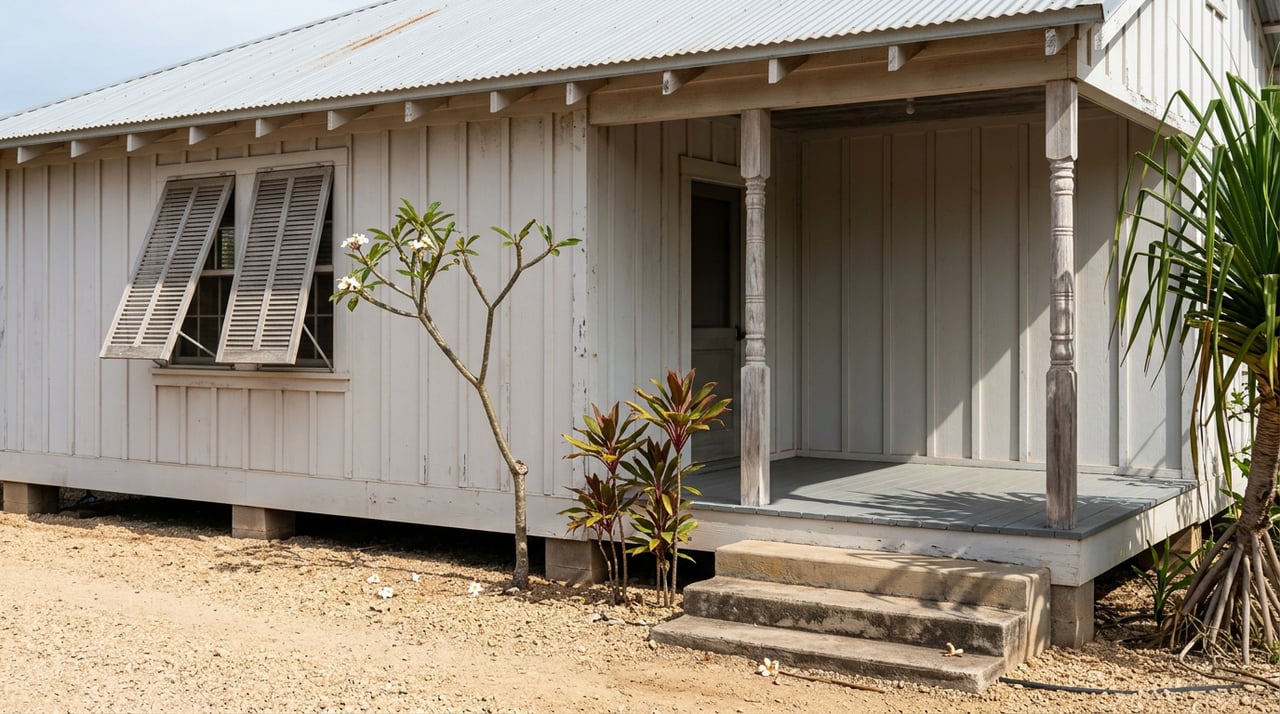
For most of a century, if you lived on Kaua'i's West Side and wanted poke, there was one place you went. Not the best place, not your favorite place. The place. Ishihara Market sat on Kaumuali'i Highway in the heart of Waimea town, and became a fixture in Waimea.
Then in March 2023, it closed. Nearly ninety years of business, gone in a single Sunday evening. Three and a half years later, the story most visitors and even some newer residents assume is that somebody must have stepped in to fill that space, literally or figuratively. Somebody didn't. What Waimea and Kekaha got instead says more about how this end of the island actually works than any single restaurant review could.
The One Poke Counter West Kauai Knew
Ishihara's history reads like the town's own. Shoko Ishihara arrived from Japan in the early 1900s to work the fields at the Kekaha Sugar Mill, and after building a following selling meat off a truck, he and his son Charles opened a market in 1934 near the mill. The family relocated the store to Waimea proper during World War II, and when Hurricane Iniki flattened it in 1992, they rebuilt and reopened in 1996 with a bigger operation and more staff. In 2018 the family sold the business to the locally owned Kalama Beach Corporation, which kept the Ishihara name and the reputation for a poke counter that regularly ran twenty or more varieties deep. That reputation held until the very end. When Kalama Beach Corporation announced the closure, the company pointed to staffing struggles and lingering pandemic pressure rather than any decline in demand.
That's the part worth sitting with. Ishihara didn't close because West Kauai stopped wanting poke. It closed because running a full-service market on the West Side, with its smaller population and thinner labor pool, had gotten harder to sustain. The demand stayed. The supply chain that met it didn't.
The Building Is Still Empty
If you drive past 9894 Kaumuali'i Highway today, the building is still there and still empty. Commercial listings for the 7,833 square foot standalone structure describe it as sitting on over 20,000 square feet of land in the heart of town, available for lease. No grocery chain, no restaurant group, no local operator has taken over that specific address in the years since Ishihara closed. That absence is itself information. In a resort town, a building with that kind of foot traffic and name recognition would have been re-leased within months. In Waimea, it has sat vacant for more than three years.
Where the Habit Actually Went
The poke habit didn't disappear. It scattered, and it scattered to places that were never trying to be Ishihara's replacement.
Big Save Waimea, part of the Times Supermarkets family, is the town's remaining full-service grocery store, and it's a member of the Kauai Grown retailer program, stocking products like Kauai Shrimp, Hanalei Poi, and pork from Kaneshiro Farms alongside its regular grocery and deli counter. It was never a poke specialist the way Ishihara was, and it isn't trying to become one now. It's simply the store that was already there, doing what it always did, a little more of the load falling on it by default.
Shrimp Station, the roadside stand at Waimea Plantation Cottages, has kept doing exactly what it has always done: garlic shrimp, coconut shrimp, and shrimp tacos served on paper plates at picnic tables, cash easiest, no pretense involved. It didn't expand to cover the gap. It just kept being itself while the gap opened up around it.
JoJo's Shave Ice, the original location in Waimea and the first of what's now a small island chain, has been serving house-made syrups since 1992 and still gives all of its profits to fund free camps for Hawai'i's young people. It's dessert, not dinner, but it's one more thread in a food scene that runs on small, independent operators who were never built to be anyone's anchor tenant.
None of these three businesses grew into Ishihara's old footprint. They just kept doing their own smaller thing, and collectively that became the answer to where West Side residents get their food now: not one place, several.
The Weekly Rhythm That Filled the Gap
What actually organizes eating on this end of the island isn't a single storefront. It's a weekly schedule spread across two farmers markets that predate the closure and have simply mattered more since.
| Day | Market | Location |
|---|---|---|
| Thursday, 3:30–5:30 p.m. | Hale Puna Farmers Market | 9567 Huakai Rd., Waimea |
| Saturday, 9:00 a.m. | Kekaha Farmers Market | 8130 Elepaio Rd., Kekaha |
These aren't tourist-facing markets built around souvenirs. They're the kind of stop where you buy what's ready that week from the person who grew it, which is a different rhythm than swinging by a grocery store on your own schedule. Living here now means knowing it's Thursday or knowing it's Saturday, not knowing an address you can visit any time.
The One Week a Year Everybody Shows Up
If the weekly markets are the quiet infrastructure, the Waimea Town Celebration is the loud proof that the community never needed a single grocery store to hold it together. The 2026 event marked its 49th year, an eight-day run that opened on Valentine's weekend with Kaua'i Cocktails and Cuisine filling the historic Waimea Theater and closed with the two-day Ho'olaule'a at the Old Waimea Mill site on February 20th and 21st. In between there was the Na'i'ole Long Distance Canoe Race, the Na Heihei A Ola fun run, a rodeo at Friendship Do's Ranch, and eating contests that ranged from ice cream to Spam musubi to kimchee. Midway through, the celebration named Kumano I Ke Ala, a Native Hawaiian-led nonprofit doing land stewardship and food system work across West Kaua'i, as that year's Ambassador of Aloha.
Kekaha runs its own smaller version of the same instinct on the Fourth of July, when the Kekaha Neighborhood Center Park hosts a free community day with food and craft vendors, carnival rides, and a Play Streets activation for kids.
Neither event exists because a business needed customers. Both exist because the town organizes itself around shared calendar dates instead of shared addresses. That's not a coincidence. It's the same pattern the poke story tells: when one storefront disappears, nothing rushes in to replace it, because the community was never actually built around that one storefront in the first place.
What This Actually Tells You About Living Here
The easy read on West Kauai is that it lost something when Ishihara closed and hasn't recovered. The more accurate read is that the town absorbed the loss the way it absorbs most things: by leaning harder on the small, independent, family-run operations that were already doing their own work, and by leaning harder on the recurring dates that already brought people together. Nobody needed to build a replacement because the town was never running on a single anchor to begin with. It runs on a calendar, a handful of counters that have outlasted bigger names, and a community that shows up on schedule whether or not there's a landmark building to show up at.
If you already live in Waimea or Kekaha, none of this changes your plans for dinner tonight. But it explains something about why this end of the island feels different from the resort corridors, and why that difference tends to be exactly what people who move here are looking for once they understand it.
If you're weighing what it actually means to put down roots on this side of Kaua'i, or you're already here and thinking about your next move on the island, Cheree Rapozo has spent decades getting to know these towns from the inside. E Komo Mai. Let's find your Hawai'i home.