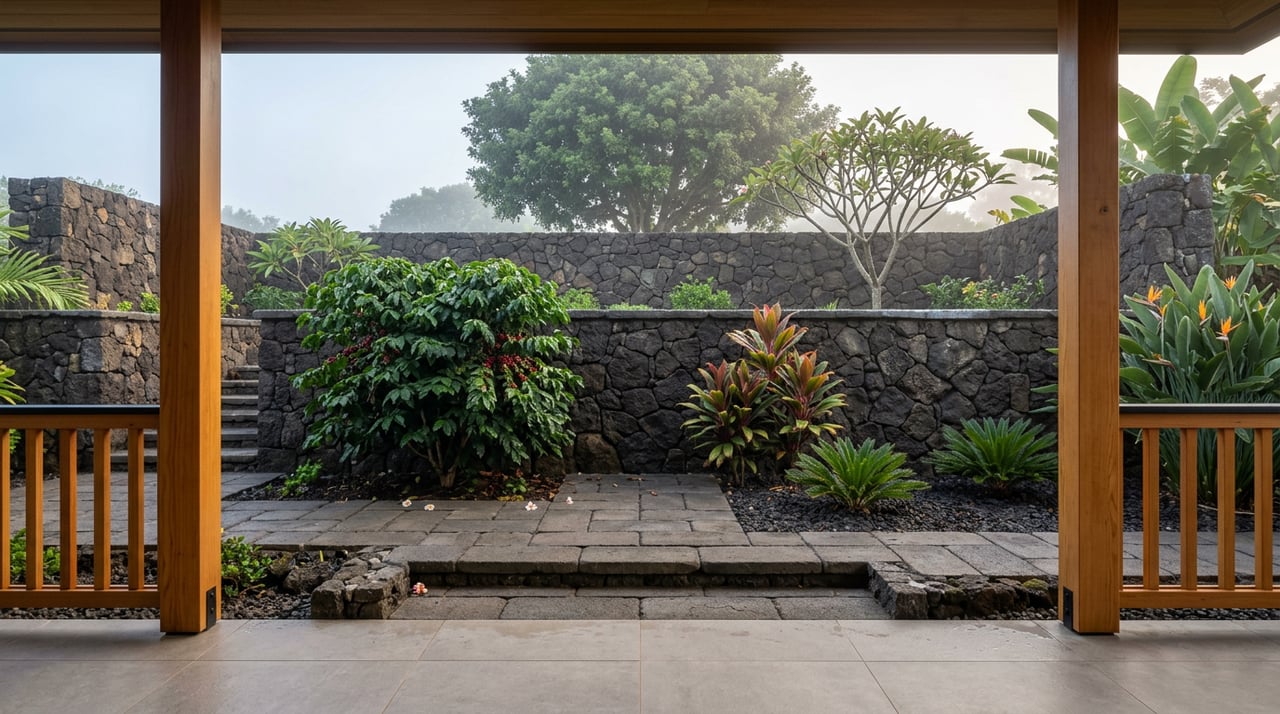
Kuaiwi Farm, tucked into the uplands above Holualoa, spent all of July with its gates closed. No public tours, no picking demonstrations, no lanai tastings. The farm reopened its doors on August 9. If you assumed the closure meant nothing was happening on that hillside, you'd be wrong in the most instructive way. Something is always happening on a working coffee farm. July was rest. August is work.
That's the part of Kona coffee season most people outside the belt never see. The version everyone knows runs backward from a parade. The Kona Coffee Cultural Festival lands in Kailua-Kona in early-to-mid November, its 56th year in 2026, ten days of cupping competitions and farm tours anchored to what looks, from the coast, like the moment the harvest happens. It isn't. By the time that parade rolls down Ali'i Drive, the harvest it's celebrating has already been underway for three months. The real season started quietly, on the mountain, sometime around now.
The Cherry Doesn't Wait for November
Coffee on the western slopes of Hualalai and Mauna Loa runs on a calendar that has nothing to do with tourism schedules. White blossoms, locally called Kona snow, cover the trees in late winter and early spring. The flowers drop, green cherries set, and through the long dry summer those cherries slowly ripen. By August the first ones are turning red. That's the signal. Picking opens.
None of this happens on a fixed date. It happens when the fruit says it's ready, which is why a farm can close for all of July and reopen the second week of August without anyone treating that as strange. July is the gap between "not yet" and "now." Kuaiwi's calendar simply made that gap visible to visitors.
One Tree, Six to Eight Trips
Here's the part that surprises people who assume harvest means a single pass through the orchard with a truck and a crew. It doesn't. A single branch on a Kona coffee tree can hold green, yellow, orange, and deep red cherries all at once, because the fruit doesn't ripen on a schedule any two cherries share. Only the red ones get picked. Everything else stays on the branch for the next pass.
Monarch Coffee Farm, a small operation on the belt, describes its own season this way: fruit starts ripening in August, the busiest stretch runs late September through early November, and because ripening happens in waves rather than all at once, the crew works through the orchard six to eight separate times each season, spaced ten to fourteen days apart. At the peak of that cycle, a picking crew brings in 400 to 600 pounds of cherry in a single day, then does it again two weeks later on the same trees.
That's not a harvest. That's a relationship a crew keeps returning to through the season, checking the same branches over and over until the plant is finished giving up fruit for the year.
The Belt Has Elevation, and Elevation Has a Clock
The Kona coffee belt is a specific, narrow strip of geography: roughly 30 miles long, a mile or two wide, sitting between about 800 and 2,500 feet on the slopes above Kailua-Kona. Inside that strip, elevation changes everything about timing. Farms lower on the belt, closer to Kealakekua and Captain Cook, tend to finish their harvest earlier. Farms higher up run later. Buddha's Cup, a women-owned farm operating for more than 20 years at 2,400 feet, sits near the top of that range, and higher-elevation operations in general are still picking into December and sometimes January, well after the lower slopes have moved into pruning and cleanup.
None of these are large operations working in isolation. Kona Le'a, a historic plantation in Holualoa, doubles as a processing mill for more than 200 neighboring farms, which tells you something the postcard version of Kona coffee leaves out: this is a belt of small, often family-run acreages that depend on shared infrastructure to get cherry into parchment and parchment into green bean. The romance of a single farm on a single hillside only survives because a handful of mills like that one are doing the heavy processing work for everyone around them.
Why Kaʻū Outscores Kona and Still Sells for Less
Here's the detail that should change how you think about that morning cup. Just south of the Kona belt, the Kaʻū district has been producing coffee that regularly outscores Kona in cupping competitions for more than a decade. Cuppers at the Hawaii Coffee Association and the Specialty Coffee Association have handed Kaʻū farms wins that Kona, by reputation alone, is supposed to own. And yet a pound of high-quality Kaʻū coffee still sells for 20 to 30 percent less than comparable Kona.
That gap isn't about what's in the cup. It's about what's on the label. "Kona" has spent more than a century building name recognition that Kaʻū, agriculturally similar and often scoring higher, hasn't caught up to yet. If you've ever wondered why a bag from one side of South Point costs meaningfully more than a bag from the other, that's the answer: you're not just paying for cherry and elevation. You're paying for the premium attached to that geographic label.
This is also why harvest season matters more than most people realize if you actually want to taste the difference. Greenwell Farms in Kealakekua and Kaʻū Coffee Mill in Pāhala both pour current-harvest lots in their tasting rooms while picking is underway, meaning the coffee in your cup during these months can be a cherry that was still on the tree a few weeks earlier. That immediacy disappears once the season winds down and tasting rooms move to older stock. August through November isn't just when the work happens. It's the narrow window when the name and the flavor are easiest to compare side by side.
What You'll Actually Notice Before November
If you live anywhere near the belt, you don't need a festival schedule to know harvest season is here. The backroads through Holualoa and up toward Kealakekua get a little busier in the early morning as picking crews arrive before the heat sets in. Wet mills that sat quiet in July start running again. Farm stands that stock whatever's freshest reopen their signs. None of it is loud. Most of it is easy to miss if you're not looking for it, which is exactly why so much of the season passes before the festival ever gets credit for it.
By the time the Kona Coffee Cultural Festival sets up its cupping competition and its parade route through Kailua-Kona this November, the crews working the upper belt will already be four or five passes deep into their own trees. The festival is one visible chapter in a story that started on a hillside in August, mostly unannounced, the way it does every year.
That's worth knowing if you live here, because it means the thing everyone associates with Kona coffee, the parade, the cupping trophies, the November headlines, is one of the most visible parts of a much longer, quieter agricultural season that's already three months underway by the time anyone off the mountain notices.
If you're the kind of person who likes understanding the place you live in a little more deeply than the postcard version allows, that's the same instinct that makes for a good conversation about Kona real estate too. Cheree Rapozo has spent decades working this coast and the upland belts above it, and she's always glad to talk story about a neighborhood before any transaction ever enters the conversation. E Komo Mai. Let's find your Hawai'i home.