If you’re dreaming about buying a home in Hilo, the weather is not a small detail. It shapes how a house lives, how it ages, and what kind of care it needs over time. The good news is that with the right due diligence and a practical maintenance plan, you can enjoy Hilo’s lush beauty with more confidence. Let’s dive in.
Why Hilo’s Climate Matters
Hilo is one of Hawaiʻi’s rainiest markets, and that matters in a very real way when you’re buying a home. Hilo International Airport normals show about 120.39 inches of annual precipitation, around 273 days with measurable rain, and an annual mean temperature near 74°F.
Rainfall also changes quickly depending on where the property sits. According to the 2023 Hilo local climatological data summary, parts of the city near the shore average about 130 inches a year, while upslope areas can reach 200 inches or more. That means two homes in greater Hilo can have very different moisture exposure.
For you as a buyer or homeowner, the main issue is usually not extreme heat or cold. It is constant moisture management. In Hilo, a home that sheds water well, dries well, and gets checked regularly will usually serve you better than one that simply looks good on the surface.
What to Look for When Buying
A beautiful home in Hilo should also be a practical one. In this climate, the right construction details and materials can help reduce future headaches and support easier upkeep.
Roof and drainage come first
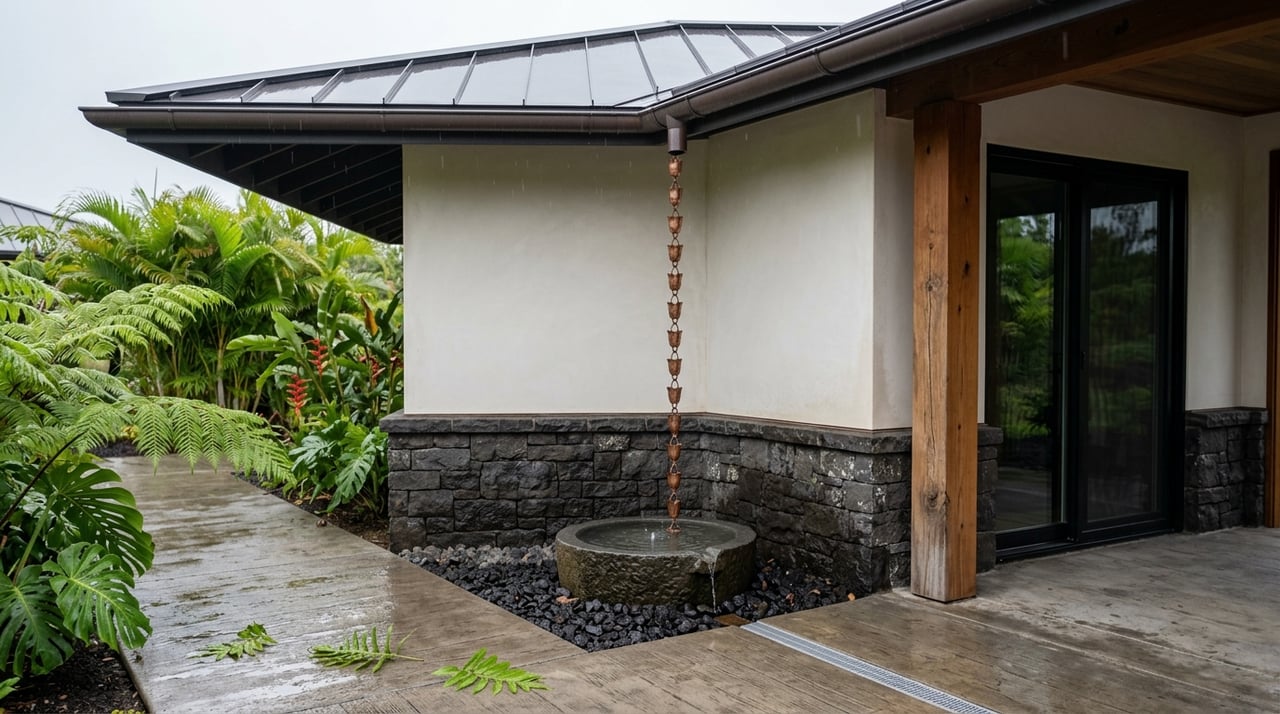
In a rain-heavy area, the roof is one of the home’s most important systems. You want to pay close attention to the condition of the roofing material, flashing, gutters, and downspouts, because these features help move water away before it can create damage.
EPA guidance on moisture control emphasizes proper flashing, drainage away from the foundation, and building assemblies that can dry after getting wet. In plain terms, that means you should value homes with water management details that appear intentional, maintained, and functional.
Fast-drying materials matter
Too much moisture can lead to mold, mildew, rot, structural damage, and paint failure. In Hilo, that makes wall assemblies, under-house ventilation, and moisture-resistant finishes especially important.
If you are comparing properties, look beyond countertops and staging. Ask how the home handles rain, humidity, and airflow, especially in lower, shaded, or enclosed areas that may stay damp longer after storms.
Termite resistance should be part of the conversation
The University of Hawaiʻi Termite Project points to treated wood, steel framing, resistant wood species, and stainless-steel mesh barriers as useful choices where termite pressure is a concern. Not every home will have the same materials, but termite resistance is worth understanding before you buy.
You should also notice whether wood touches soil, whether debris is stored near the structure, and whether vegetation is growing tightly against the exterior. Those conditions can raise risk and make routine monitoring harder.
Coastal exposure can change material needs
Some Hilo-area properties may also deal with salt air exposure, especially in coastal locations. FEMA coastal construction guidance treats corrosion resistance, decay resistance, flood considerations, and wind durability as important factors in material selection.
That can affect hardware, connectors, and fasteners over time. If a home is near the coast, it is smart to ask more questions about corrosion-resistant components and ongoing exterior maintenance.
How to Handle Due Diligence in Hilo
A strong buying strategy in Hilo usually includes more than a standard walkthrough. You want a broad understanding of the home’s condition and then, when needed, follow-up review from qualified specialists.
Start with a general home inspection
A general home inspection is still an important first step. At the same time, Hawaiʻi’s state auditor describes home inspections as non-invasive and not intended to determine code compliance.
That matters because an inspection may identify signs of concern without fully diagnosing the source or scope. If issues come up, you may need another qualified licensed professional to evaluate the next step.
Give extra attention to moisture-related issues
In Hilo, a standard inspection should often be paired with close review of areas most affected by wet conditions. That includes:
- Roof condition and flashing
- Gutters and downspouts
- Drainage around the home
- Under-house or crawlspace moisture
- Visible mold or mildew
- Plumbing leaks
- Corrosion
- Evidence of termite activity
These issues are especially relevant because Hilo’s climate puts constant pressure on any weak point where water can enter or linger.
Verify flood risk by parcel
Flood risk should be checked property by property, not guessed by neighborhood. The State of Hawaiʻi DLNR Flood Hazard Assessment Tool is the informational viewer the County of Hawaiʻi points people to for parcel-level flood map review.
The Hawaiʻi DCCA notes that flood insurance is separate from homeowners insurance. It is generally not required unless the property is in a designated high-risk flood zone, but flooding can still happen outside mapped areas.
Use licensed professionals for repairs and specialty work
If inspection findings lead to repair estimates or follow-up work, make sure you are working with properly licensed professionals. Hawaiʻi DCCA says a contractor license is required for projects over $1,500 in labor and materials or for any project that needs a building, electrical, or plumbing permit.
DCCA also provides Business Check tools that consumers can use to verify licenses and complaint history. For termite-related inspections or treatment, Hawaiʻi requires pest control operators and their field representatives to be licensed as well.
What Caring for a Hilo Home Looks Like
Owning in Hilo often means being more proactive than reactive. A little attention on a regular basis can help you catch small issues before they become expensive ones.
Make moisture control your top habit
The most important long-term habit is simple: do not let water sit where it should not. EPA recommends grading the ground away from the foundation and directing downspouts several feet away from the wall.
That kind of basic water management can help limit indoor moisture, protect structural materials, and reduce conditions that support mold and decay. In a place with frequent rain, those details matter month after month.
Check for leaks after rain
After periods of heavy rain, it is wise to make a quick pass through the house. Pay close attention to bathrooms, under-sink cabinets, laundry areas, attic spaces, and lower or shaded parts of the home that tend to stay damp.
You are looking for signs that water is entering, collecting, or not drying quickly. Even a small leak can turn into a bigger mold or rot issue if it goes unnoticed.
Act fast if materials get wet
If water gets inside, timing matters. University of Hawaiʻi mold guidance says damp materials should be dried or replaced within 24 to 48 hours after a leak or spill.
That quick response can help reduce the chance of mold growth. In Hilo’s humid environment, waiting too long can allow a manageable problem to spread.
Support indoor airflow and humidity control
EPA recommends bathroom and kitchen exhaust fans that vent outdoors, along with ventilation approaches that help control indoor humidity. In a humid climate, good airflow is not just about comfort. It helps the house dry and can reduce conditions that support mold and dust-mite problems.
When you tour homes or plan improvements, think about ventilation as a practical system, not an afterthought. A home that breathes well often performs better in Hilo.
Watch for termites year-round
The University of Hawaiʻi Termite Project recommends monthly visual termite inspections. It also advises owners to remove wood, cardboard, and plant debris near structures, keep plants away from walls, prevent wood-to-soil contact, and make sure water does not collect near the home.
That checklist is especially useful in Hilo because termite risk and moisture risk often overlap. Keeping the exterior clear and dry makes it easier to spot problems early.
A Simple Hilo Home Care Checklist
If you want a practical starting point, focus on these basics:
- Inspect the roofline, gutters, and downspouts regularly
- Keep water draining away from the home
- Check under sinks, bathrooms, laundry areas, and attic spaces after major rain
- Dry wet materials quickly, ideally within 24 to 48 hours
- Trim plants back from exterior walls
- Remove wood, cardboard, and debris stored near the house
- Avoid wood-to-soil contact
- Watch for visible termite tubes, corrosion, and mildew
- Use licensed contractors and licensed pest-control professionals when work is needed
- Review flood risk for the specific parcel before you buy
Why Local Guidance Helps
Buying in Hilo is not just about finding a home that fits your budget or style. It is also about understanding how that property will perform in a lush, rain-heavy environment.
That is where local, practical guidance matters. When you know what to look for in inspections, site drainage, materials, flood risk, and ongoing care, you can make a more informed decision and feel more prepared after closing.
E Komo Mai. If you’re thinking about buying or selling on the Big Island and want grounded, practical guidance for Hilo’s unique climate, connect with Cheree Rapozo.
FAQs
How rainy is Hilo compared with other parts of Hawaiʻi?
- Hilo is one of Hawaiʻi’s wettest markets, with Hilo International Airport normals showing about 120.39 inches of annual rainfall and around 273 days with measurable precipitation, while rainfall can vary sharply by elevation and location within the area.
What should buyers inspect first in a Hilo home?
- Buyers in Hilo should pay especially close attention to the roof, flashing, gutters, downspouts, drainage, crawlspace or under-house moisture, plumbing leaks, visible mold, corrosion, and signs of termite activity.
Does a Hilo buyer need flood insurance?
- Flood insurance depends on the property’s parcel-specific flood risk, and Hawaiʻi DCCA says it is separate from homeowners insurance and generally not required unless the home is in a designated high-risk flood zone.
Should Hilo buyers use both a home inspector and a contractor?
- Yes, because a general home inspection is a non-invasive overview, while licensed contractors may be needed to evaluate or repair issues found during the inspection process.
What should a new homeowner watch for after moving into a Hilo property?
- A new Hilo homeowner should watch for roof leaks, drainage problems, lingering dampness, crawlspace moisture, corrosion, termite tubes, and any area where water is not drying quickly after rain.